Hot Foil Printing: The Alchemy of Gilded Press
Heat, Light, and the Physics of the Strike
The Hook
Most people call it “foil blocking” or “stamping.” I call it a physical transformation. It’s the moment where a flat design becomes a three-dimensional object. It’s where the cold precision of a brass die meets the organic texture of a premium sheet, fused together by 180°C of heat.
If you’ve only ever seen foil on a screen, you haven’t seen it at all.
Beyond the Shine
Digital foil, the kind you get from the “bish-bash-bosh” shops, is just stuck to the surface via toner. It lacks depth, impression, and the coveted “bite.” There’s no deboss, no shoulder, no tactile dimension, just a “that will do” surface gloss for those in a rush.
In this workshop, we don’t just apply foil; we press it.
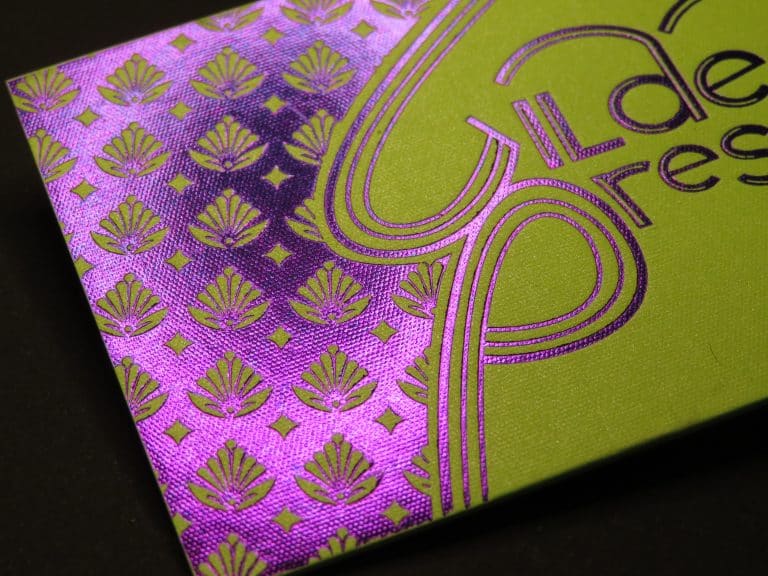
We use antique foil presses and cast-iron letterpresses to drive metallic foil deep into the fibres of the stock. When the light hits a Gilded Press impression, it doesn’t just reflect; it refracts and dances within the debossed valleys formed by precise pressure. You see a distinct “shoulder” or “halo” around the edge of the foil, a microscopic crater that proves the piece was pressed, not just printed. This is the hallmark of real hot foil printing: a union of heat, pressure, and time.
The Three Pillars of the Strike
- The Temperature: We run at 180°C. Too cold and the foil won’t release from its carrier film; too hot and the edges “bleed” or lose definition. It takes years of lever-pulling and an intuitive feel for the foil and substrate to know exactly when the metal is ready to transfer flawlessly.
- The Dwell: This is the time the heated die, foil, and paper spend in contact under pressure. It’s usually less than a second, but it’s the difference between a crisp, razor-sharp edge and a blurred, overworked impression. The dwell time must match the foil type, stock, and die depth.
- The Pressure: This is where the “No Delete Button” philosophy comes in. We aren’t just “kissing” the paper; we’re intentionally embossing, debossing, and sometimes even sculpting it with sometimes violent force.
The Paper is the Canvas
You can have the best brass die in the world, but if you strike it into a “bin liner” sheet of clay-coated digital paper, you’re wasting your time.
The heat and light only truly work when they have a textured, uncoated, or cotton-rich stock to grab onto. Whether it’s a 350gsm Gmund Action, a Colorplan duplex, or a bespoke 1000gsm+ triple-ply sandwich, the stock’s tooth and absorbency determine the foil’s brilliance, adhesion, and longevity.
A Note for the Purists
If you’re obsessing over hex codes and millimetres on a screen, remember that the final handshake is physical. Your client won’t remember the pixels. They will remember the weight of the board and the shimmer of the light caught in the impression.
If you care about the difference, you’re one of us.
Simon, Proprietor The Gilded Press (Pulling levers since 1987)